How Long Does Copyright Last & Other Questions Answered
Put simply, Copyright is a form of legal protection supported by law: it gives an author the right to control how their material is used. Anything you wish to do with a free ebook, other than read it, requires the author's written permission. Just because it's free does not mean you can sell it or offer it for download on your website. The content is the author's intellectual property; only he or she has the right to make it available free or for sale and will appoint official distributors under what is called a license. This also applies to images, music and video, so you must be very careful what you do with material created by someone else. In this article we will refer specifically to digital books.
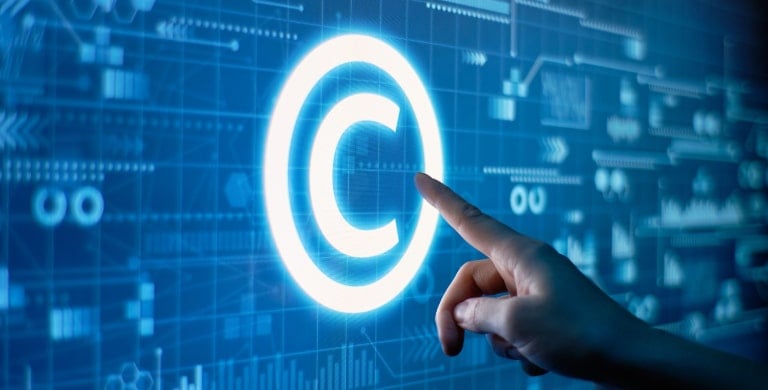
Copyright is automatic: it belongs to the author as soon as a work is created. There is no legal requirement to register a book in any way or with any organization, although an author may do so voluntarily via the Copyright Office in the United States for public filing. When you find free books to read online, they will usually have a Copyright Notice on the title page: the © copyright symbol (a letter C in inside a circle) alongside the author's name and the year the work was created: this is not strictly required because a book is still protected without a relevant notice. Always presume a book is Copyright protected unless otherwise stated! If you copy and publish Copyright-protected text, images or files without permission, you are committing a crime, and can be personally prosecuted in a court of law.
Copyright lasts for 70 YEARS following the death of the author
Copyright as we know it today is based on the Berne Convention: an international agreement to protect literary and artistic work, which was drawn up and accepted in 1886. As a general rule, in the U.K. and Europe, Copyright lasts from date of the creation of the work until 70 years following the authors death. Until such time, intellectual property rights remain part of the author's estate and may be owned and managed by family members. The law in the U.S.A. is quite different and more complicated; we therefore recommend further reading: U.S. Copyright Law and from Cornell University: Copyright Term and the Public Domain in the United States.
You can be confident the books you download from this site are licensed and distributed legally, Obooko does not accept posting of books by the general public.
This is Lawful
Writing about and providing a direct link from your blog, website or social network to any page on obooko.com
This is Unlawful
You break the law if you download a Copyright-protected ebook (with or without a Copyright notice) from obooko, upload the digital file to your server and make it available from your website/blog for direct download without permission from the author or publisher. It is also a serious offence to translate or offer these ebooks for sale.
Distributing ebooks without permission, whether free or purchased, is illegal. It's known as Copyright Infringement or Digital Piracy. What's more, changing the cover or the author's name and passing a book off as your own is an act of Plagiarism, also punishable by law. It is no different to illegally downloading music, software or movies, or copying and selling counterfeit dvds. Just because you can do it does not mean it is right. We will and do take legal proceedings against all cases of infringement associated with work listed on the Obooko website.
Usage Licences
You will find three licence types on obooko:
Standard Copyright
The majority of free e-books on obooko are Copyright-protected works. Two of the major acts that offer legal protection of an author's intellectual property rights are the The Copyright Act of 1976 in the United States of America, and the Copyright, Designs and Patents Act 1988 in the United Kingdom. For other countries there are international treaties that will automatically protect literary and creative work. It will be prudent to familarise yourself with the laws of your own country. Under the Standard Copyright you must not copy or reproduce; alter; transmit; distribute free or for sale, any work without written permission from the Copyright holder.
Creative Commons
These ebooks are published under a specific licence, which is a set of conditions which may allow you to copy, share, remix and make derivative works. However, some of the author's legal rights as Copyright holder still apply and you must read and abide by the terms of the actual Creative Commons licence appearing inside each work. Please note that while the text of a book may be licensed this way, the book's cover art and any added illustrations or photographs may be protected separately by the creator/s under Copyright law. Assume nothing: always check.
Public Domain
These books have no restrictions. If no laws establish proprietary rights over a work to restrict its use by the public at large; typically when Copyright has lapsed or has deliberately been waived by the author, it is deemed to be in the Public Domain. However, while the text may be in the Public Domain, as with Creative Commons books, cover art and design features may be protected separately by standard Copyright. You must therefore ensure you contact the publisher if you wish to copy or distribute a specific Public Domain edition.
Ebooks on Obooko are 100% legal
 We are officially authorised distributors of the free books on this site, which means for Copyright-protected books we have written permission (a licence) from the author to host and share their work globally. We therefore confirm that you may, with total confidence, legally download free ebooks from obooko for your personal use.
You are allowed to download, store, read and where stated, print (on a home printer) these e-books: no other rights are granted. You must NEVER attempt to sell these books. The author owns the digital and printing rights to their work and is the ONLY person who has the right to appoint distributors or sell their books.
© obooko publishing 2024.