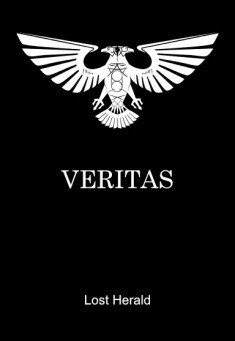
Veritas
by
Free ebook download: Veritas by , legally licensed and available in PDF format.
A groundbreaking philosophical treatise that introduces the concept of Terranism, a new ideological framework for understanding and shaping the future of human civilization.
"Veritas" is a groundbreaking philosophical treatise that introduces the concept of Terranism, a new ideological framework for understanding and shaping the future of human civilization. Written by the enigmatic figure known as the Lost Herald, this book is a culmination of years of deep reflection, rigorous analysis, and visionary insight.
At its core, Terranism is a doctrine that seeks to align the eight pillars of civilization - the Individual, the Family, the Society, the Belief, the State, the Economy, the Military, and the Technology - with the fundamental realities and purposes of life itself. It is a call to recognize and embrace our shared identity as Terrans, and to work together towards a future in which all life can thrive and evolve.
The book begins by laying out the foundational principles of Terranism, including the three primary purposes of life: the continuation of life, the spreading of life, and the pursuit of contentment. It then delves into a deep exploration of each of the eight pillars, examining how they have evolved throughout history and how they must be transformed to align with the Terran vision.
Throughout this journey, the Lost Herald grapples with profound questions of existence, meaning, and purpose. They examine the challenges and opportunities of our current moment in history, and argue for the necessity of a fundamental shift in our values, priorities, and actions as a species.
Central to this shift is the concept of The Mantle - a sacred responsibility to uphold the highest potentials of life and to work towards a future of greater harmony, wisdom, and flourishing. The book argues that by taking on The Mantle, by embracing our identity as Terrans and working together towards a common vision, we can transcend our current limitations and create a new chapter in the story of human civilization.
"Veritas" is a work of profound philosophical and spiritual depth, but it is also a practical guide for navigating the challenges of our time. It offers concrete strategies and proposals for transforming our societies, economies, and technologies in alignment with Terran principles, and for cultivating the wisdom, compassion, and resilience needed to thrive in an uncertain future.
Ultimately, "Veritas" is a clarion call for a new way of being and thinking - a invitation to participate in the greatest adventure in human history. It is a book that will challenge assumptions, spark new ideas, and inspire readers to take up the mantle of change in their own lives and communities.
Whether you are a seasoned philosopher or simply a seeker of truth and meaning, "Veritas" is a book that will leave you transformed. It is a beacon of hope and vision in a time of great uncertainty, and a testament to the power of ideas to shape the future of our world.
Excerpt:
Birth of Terranism
Throughout history, civilizations have evolved and adapted to their surroundings, developing new systems and ideologies to tackle challenges and problems. From the earliest human societies that emerged in the prehistoric age, to the complex and interconnected world we live in today.
Humanity has sought to improve and progress through technology, governance, and social organization. From the earliest kingdoms of the ancient world, like those of the Mesopotamians and Egyptians, to the great empires that dominated the Middle Ages, such as the Roman and Chinese empires, different approaches to governance and social organization have been tried and tested.
As the world continues to evolve and change, it becomes increasingly important to consider the long-term impacts of our actions and the systems we put in place. The history of our civilizations is rich and varied, filled with examples of triumph and failure, of progress and regress. We have come a long way from the earliest human societies that struggled to survive in a harsh and unforgiving world to the modern era of globalization and interconnectedness.
The rise of Fascism, Communism, Liberalism, Democracy, and Capitalism has shaped much of our world today. These ideologies have brought about significant advancements and improvements in many areas, but they have also created their own problems and challenges. Poverty, conflict, and disease are just a few examples of the issues plaguing Humanity, despite our best efforts to solve them.
It is clear that a new approach is needed, one that takes into account the lessons of the past and the challenges of the present but is also forward-thinking and adaptable to the unique challenges of the future. Terranism offers such an approach, with a comprehensive philosophy that addresses the root causes of these problems and creates a sustainable future for all.
The journey to create and refine Terranism was rigorous and enightening, filled with intense study, introspection, and open dialogues. It involved critically analyzing existing systems, predicting potential future challenges, and searching for thorough solutions that are as pragmatic as they are idealistic. Confronting the limitations of past doctrines and recognizing our times’ unique problems, I contemplated a new ideological solution.
It became apparent that the answer would not be found in strict adherence to any existing dogma but rather in a fresh perspective emphasizing our collective survival and prosperity as a species. This contemplation ultimately led to the birth of Terranism. Essentially, the journey of formulating Terranism is a story of Humanity's journey – an ongoing endeavor to seek harmony and prosperity.
It is this journey that I wish to share with you in the hope that it can offer a new path for us to tread together toward a future where life thrives and where every person has the freedom and opportunity to seek contentment.